

If you feel bloated after adding bran, legumes, or a fiber powder, do not rush to increase the portions further. First consider how many things in your diet have changed. Small, gradual steps can help you find a tolerable amount of fiber and understand what you react to.
A sudden shift from your usual diet to a large amount of plant foods can increase gas. The World Gastroenterology Organisation recommends increasing fiber gradually over several weeks rather than trying to change your diet in a few days. WGO guidance on diet and the gut.
Why can healthy foods cause bloating?
Some dietary fibers reach the large intestine, where bacteria break them down in a process called fermentation. Gas is produced during this process. If you add several new sources of fiber within a short time, you may notice changes in how your abdomen feels. Bloating does not always mean there is much more gas; gut sensitivity also matters. NIDDK on causes of gas and bloating.
For example, you might add bran to breakfast porridge, replace your usual side dish with a large portion of beans at lunch, and try an inulin drink for the first time in the evening. That is three changes at once. It is hard to tell from one day whether a particular food, portion size, or combination made a difference.
Fibers also have different properties. Inulin ferments readily, while psyllium forms a gel when it comes into contact with water. So the same word, “fiber,” on two packages does not mean the products will be tolerated in the same way.
What to do with your menu now
- List recent changes. Include foods and added fibers such as bran, inulin in drinks or bars, and new powdered blends. Note your usual serving of each food, not just its name.
- Do not add everything at once. If mild discomfort followed a sharp increase in fiber, pause further increases. You can reduce a recently added serving and keep familiar foods that you previously tolerated.
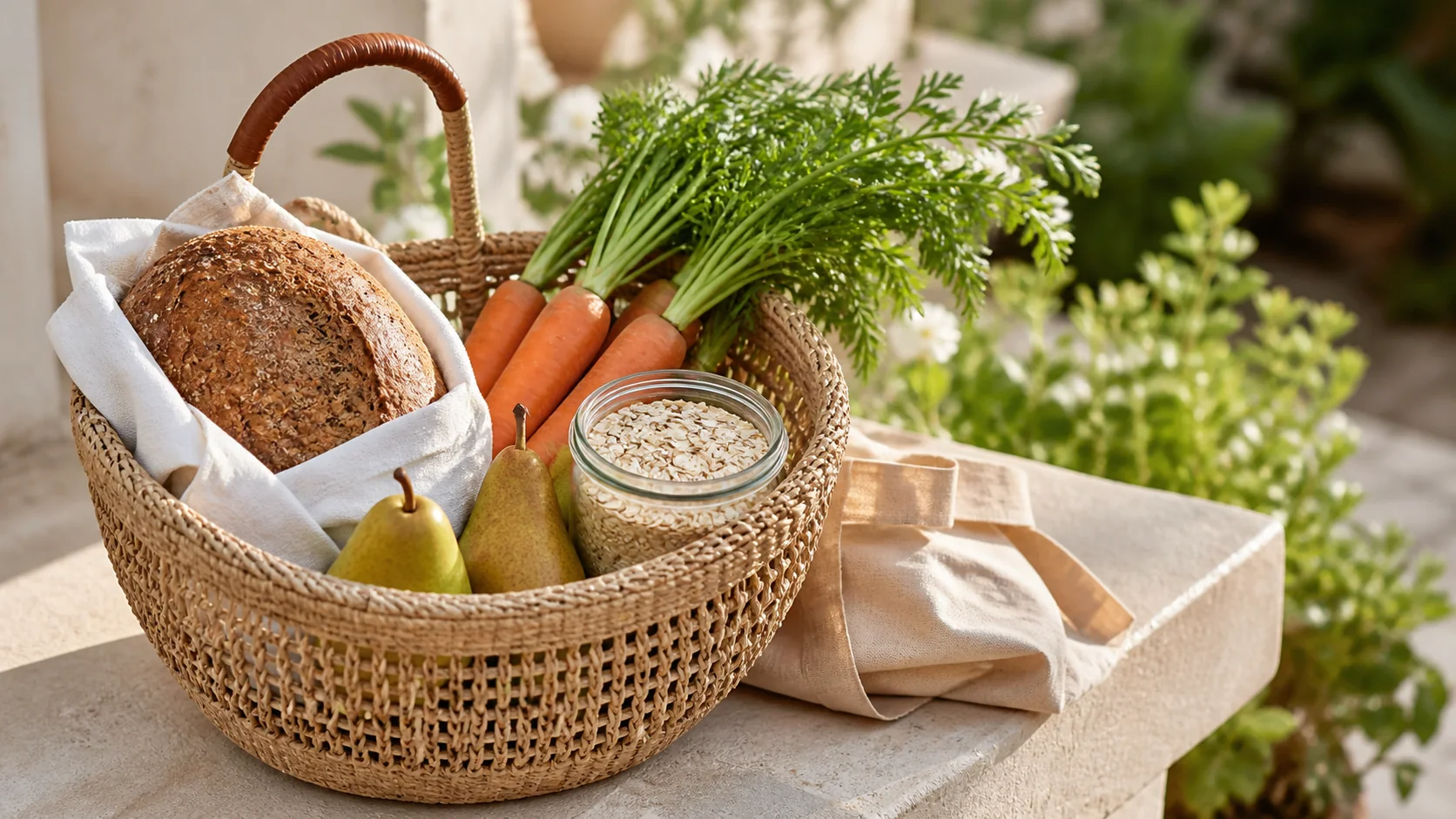
- Choose one next change. For example, replace part of your usual white bread with whole-grain bread or add a small amount of cooked vegetables to a familiar lunch. These are options to observe, not a required daily menu.
- Pay attention to your tolerance. Keep the chosen serving steady until you understand how you respond. If you feel well, you can take another small step. If discomfort increases, do not force a larger amount.
You do not need to remove all vegetables, fruit, and grains after one uncomfortable combination. It is easier to start with familiar foods and change one thing at a time. If a healthcare professional has prescribed a special diet, discuss changes with them.
Examples of small changes
| What you want to change | A possible first step |
|---|---|
| Eat whole grains more often | Replace one familiar slice of white bread with whole-grain bread and keep the rest of breakfast the same. |
| Add vegetables to lunch | Add a small amount of cooked carrot to a familiar side dish before moving to a large portion of vegetables. |
| Include legumes | Start with a small amount of well-cooked lentils in a usual meal rather than replacing the entire side dish. |
| Vary your snack | Choose a small serving of a familiar fruit and assess it separately from new bars and blends. |
Choose one suitable option rather than all four at once. Even familiar foods are tolerated differently, so the table cannot guarantee that you will not feel bloated.
What role does water play?
Fluids help dietary fiber do its job and support softer stools. Drink throughout the day; keep water somewhere you are likely to remember it, such as on your desk. Fluid needs depend on health, activity, and the environment, so one universal number of liters is not right for everyone. NIDDK guidance on fiber and fluids.
Water does not prevent a reaction to an excessively large serving. If a healthcare professional has limited your fluid intake, follow that limit and discuss fiber use with them. For powders and blends, follow the package directions for preparation and fluid intake.
A tolerance diary: what to record
A short note is more useful than trying to remember every detail in the evening. Copy this template for each day you change your menu:
- Date and time of the meal.
- What changed: the food, how it was prepared, and the portion in familiar units such as a slice, spoonfuls, or part of a plate.
- Drinks and supplements that day.
- When bloating started and how much it bothered you: none, noticeable, or interfered with usual activities.
- Bowel movements: whether you had one and whether stools became harder or looser or were difficult to pass.
- Other circumstances: eating quickly, an unusually large dinner, or a change in routine.
“I did not tolerate fiber” is not very helpful for your next attempt. “I added a few spoonfuls of beans at lunch; discomfort began in the evening” describes what happened more precisely, but still does not prove the cause. Look for a recurring pattern rather than excluding an entire food group based on one coincidence.
What a study of combined fibers found
In a 2026 study, healthy volunteers received 15 g of inulin together with 15 g of psyllium, methylcellulose, or maltodextrin as a control on different days. Thirty people completed all three stages. Researchers measured hydrogen in exhaled air as an indirect marker of fermentation.
With psyllium, the measure was lower during the first six hours than with the control, but there was no statistically significant difference over 24 hours. This illustrates why the rate of fermentation and its total daily measure should be distinguished. The study does not prove that every blend with psyllium relieves bloating; the research amounts are not directions for use. Full study in Food & Function.
How ColonGuard complements the diet
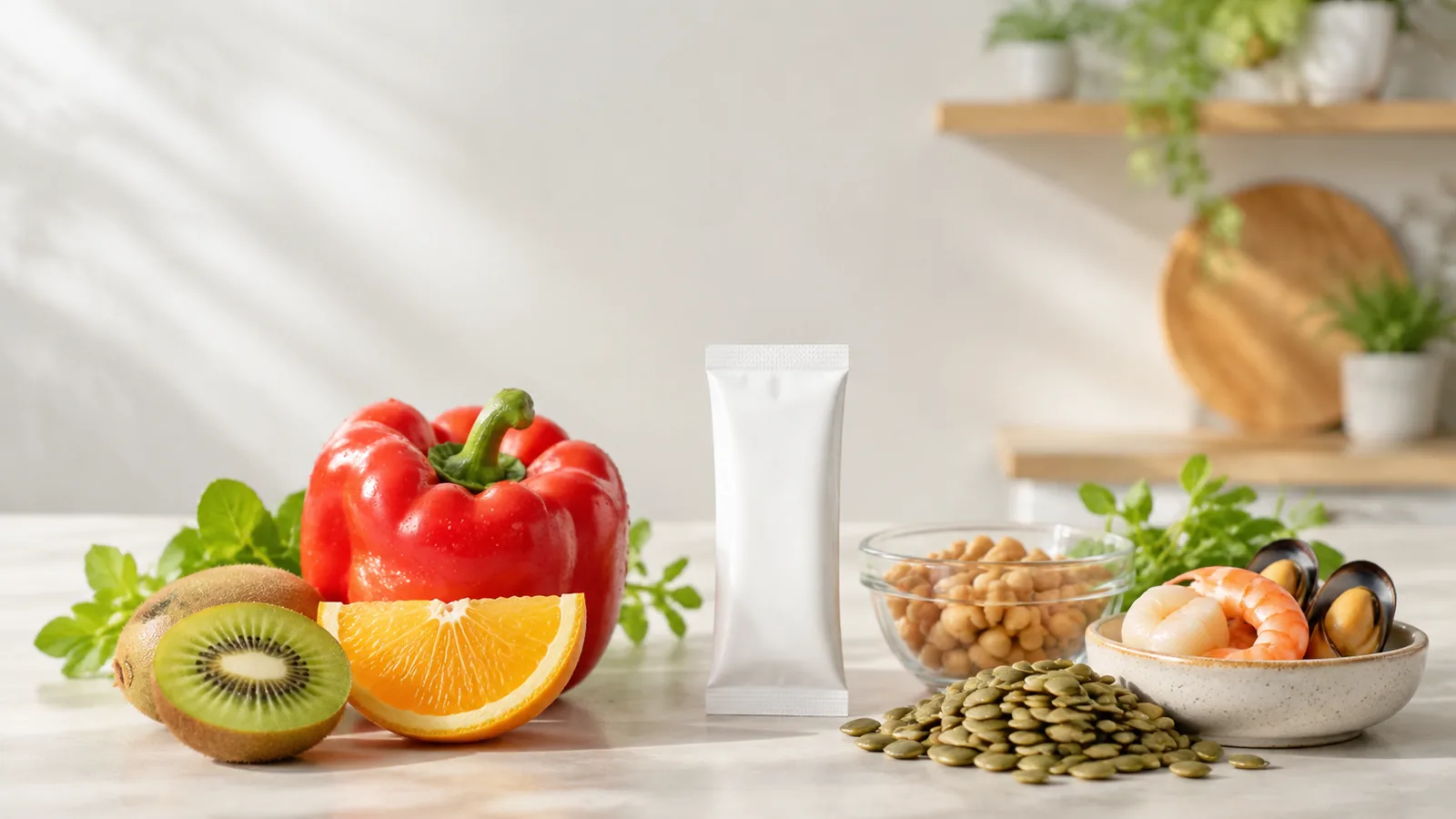
ColonGuard by YES Global contains psyllium husk, inulin, and flax seeds. Psyllium binds water and forms a gel; inulin serves as a substrate for gut bacteria, while flax adds plant-based dietary fiber. The formula also combines AB-Kefir™ and SynForU™-GastroKeep with other ingredients.
A practical feature of ColonGuard is its premeasured servings: the package contains 15 sachets of 2 g each. They are easy to store and take with you, without measuring powder with a spoon. The 2 g is the weight of the entire blend, not pure fiber; the sachet complements the diet and does not replace the daily need for dietary fiber.
ColonGuard may be considered as one option for adding fiber to the diet. If you are already noticeably bloated, first review recent changes to your menu; adding another blend on top of several new foods makes it harder to assess tolerance.
The directions for ColonGuard are one sachet at night before bed; follow the package instructions and drink additional water after taking it. Do not increase the number of sachets to speed up results. If you are pregnant, take medication, or have a medical condition, discuss the ingredients with a healthcare professional. This product is not a medicine. ColonGuard ingredients and directions.
When not to wait for your body to adjust
See a healthcare professional if bloating keeps recurring, continues after dietary changes, or comes with unintentional weight loss or blood in your stool. Sudden severe pain requires urgent care; bloating together with vomiting or an inability to pass gas or stool also needs prompt medical assessment. NHS: when to get help for bloating.
For your next dietary change, one clear step is enough: choose a familiar source of fiber, decide on a small serving, and record how you respond. Your next decision can then be based on your own observations.