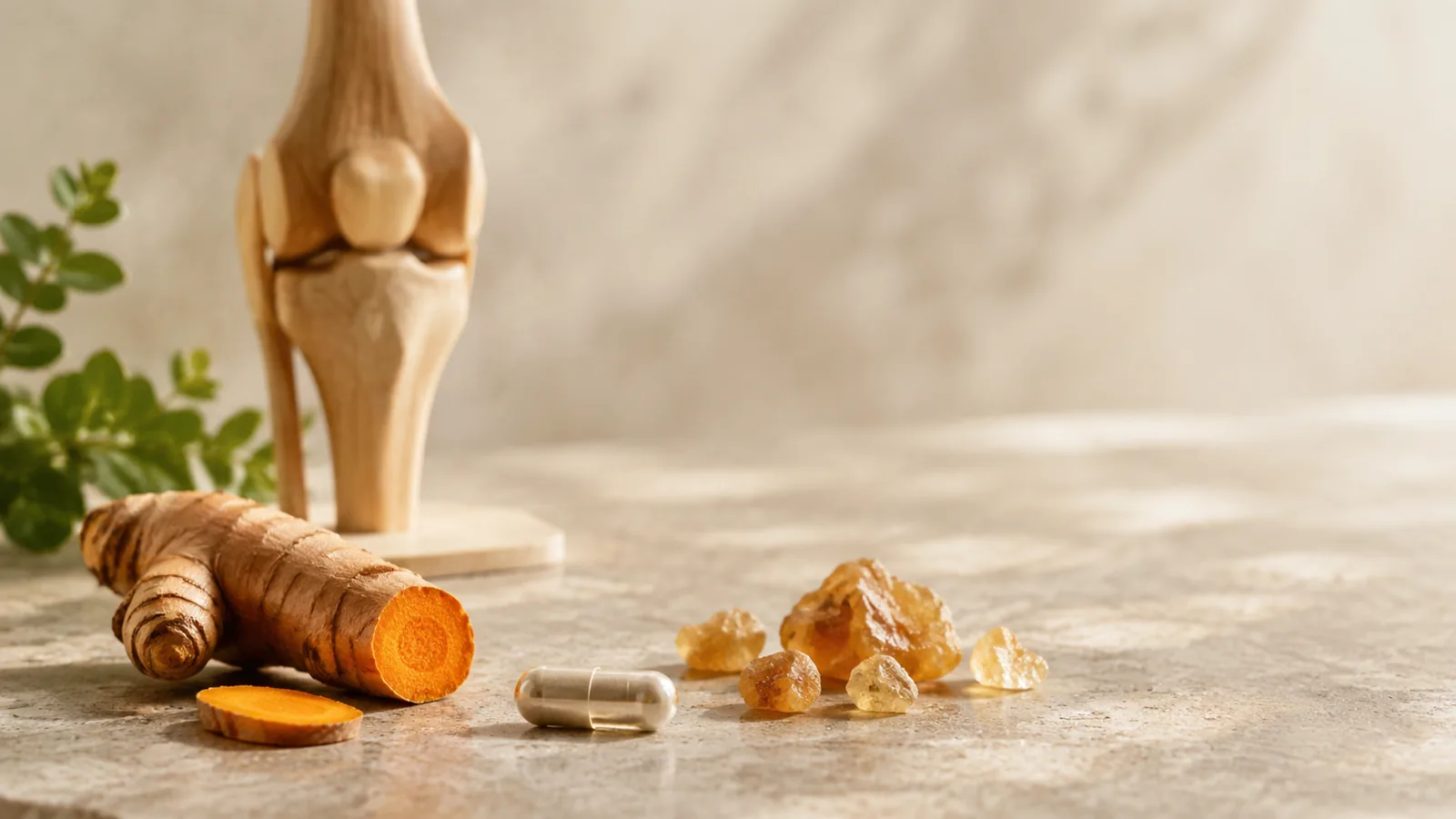



J'Flex contains glucosamine sulfate and methylsulfonylmethane (MSM). These ingredients often appear in joint formulas, but they are different substances with different research histories. Most clinical studies measure pain, stiffness and everyday function—not “cartilage restoration”.
What Is Glucosamine?
Glucosamine is a naturally occurring amino sugar involved in the structure of cartilage and other tissues. Supplements most often contain glucosamine sulfate or glucosamine hydrochloride. Results for one form should not be applied to another without checking the evidence.
A compound’s biological role does not prove that taking it “builds new cartilage”. After ingestion, it is digested and metabolised, and joint health depends on age, load, injuries, inflammation, muscle strength and many other factors.
What Is MSM?
MSM, or methylsulfonylmethane, is an organic compound that contains sulphur. Supplement studies examine it alone or alongside glucosamine, chondroitin and botanical extracts.
MSM is not a form of glucosamine and does not have the same chemical role. Proposed mechanisms from laboratory experiments do not replace clinical data. For practical conclusions, the key question is whether pain, function and quality of life changed compared with placebo.
What Researchers Measure in Osteoarthritis
Studies most often include people with osteoarthritis of the knee, hip or hand. Outcomes can be measured at several levels:
- Pain—a visual scale or the pain section of the WOMAC questionnaire.
- Stiffness—how hard it is to start moving after rest.
- Function—walking, climbing stairs and other everyday activities.
- Quality of life—the overall effect of symptoms on daily life.
- Joint structure—changes on X-ray or MRI, which are studied less often and over longer periods.
Improvement in one item does not mean all the others improved. A statistically significant difference may also be too small for someone to notice in everyday life.
What Is Known About Glucosamine?
Glucosamine has been studied much more widely than MSM, but findings are mixed. NCCIH notes that large trials and reviews have reached different conclusions and professional guidelines disagree. Results may depend on the form of glucosamine, product quality, joint, baseline symptoms and study design.
Some studies found that glucosamine sulfate reduced certain symptoms; others found no benefit over placebo. Glucosamine therefore cannot be promised as a universal pain remedy or as a way to restore damaged cartilage. For diagnosed osteoarthritis, a plan still centres on suitable physical activity, weight management where appropriate and treatment agreed with a doctor.
What a Separate MSM Trial Found
In a double-blind randomised trial published in 2011, 49 men and women aged 45–90 with confirmed knee osteoarthritis took MSM or placebo three times daily for 12 weeks.
The groups differed in the overall WOMAC score and its physical-function section. Differences on the separate pain and stiffness scales did not reach statistical significance. The authors stated that improvements were small and their clinical importance remained unclear.
This trial shows why the full set of results matters. Saying “MSM improved the joint” would conceal the small sample, short duration and lack of convincing change across all key measures.
Evidence Compared
| Question | Glucosamine | MSM |
|---|---|---|
| Type of substance | Amino sugar | Sulphur-containing organic compound |
| Volume of research | Many trials and reviews | Fewer, generally small studies |
| Common participants | People with osteoarthritis | People with osteoarthritis or mild knee pain |
| Main outcomes | Pain, stiffness, function and sometimes structure | Pain, function and quality of life |
| Overall picture | Mixed findings | Some positive findings, but limited certainty |
A 2018 systematic review combined 69 studies of 20 supplements for osteoarthritis. Glucosamine and MSM showed statistically significant short-term improvements in pain, but their clinical importance was unclear. On average, supplements did not show a clinically meaningful effect on pain and function over medium- and long-term follow-up. Newer small MSM studies have not resolved this uncertainty.
How Glucosamine and MSM Are Combined in J'Flex
J'Flex combines glucosamine sulfate and MSM with boswellia extract, MKare® from chicken eggshell membrane and turmeric extract. One capsule contains 500 mg of the entire blend; the pack contains 120 capsules.
Adding ingredients broadens a formula, but research results cannot be added up arithmetically. A study of MSM alone does not prove the effect of the combination, and glucosamine data do not confirm that the whole product changes cartilage structure.
Take J'Flex after food with water, up to four capsules per day. The recommended period is at least eight weeks. Do not use it if you are allergic to eggs or their components. If you take anticoagulants or other medicines, consult a healthcare professional. J'Flex is not a medicine.
Glucosamine and MSM are grouped by their intended use, not by mechanism or strength of evidence. The evidence supports discussion of joint symptoms and function, not a promise to rebuild cartilage. If pain, swelling or restricted movement persists, a supplement should not delay diagnosis and an individual treatment plan.