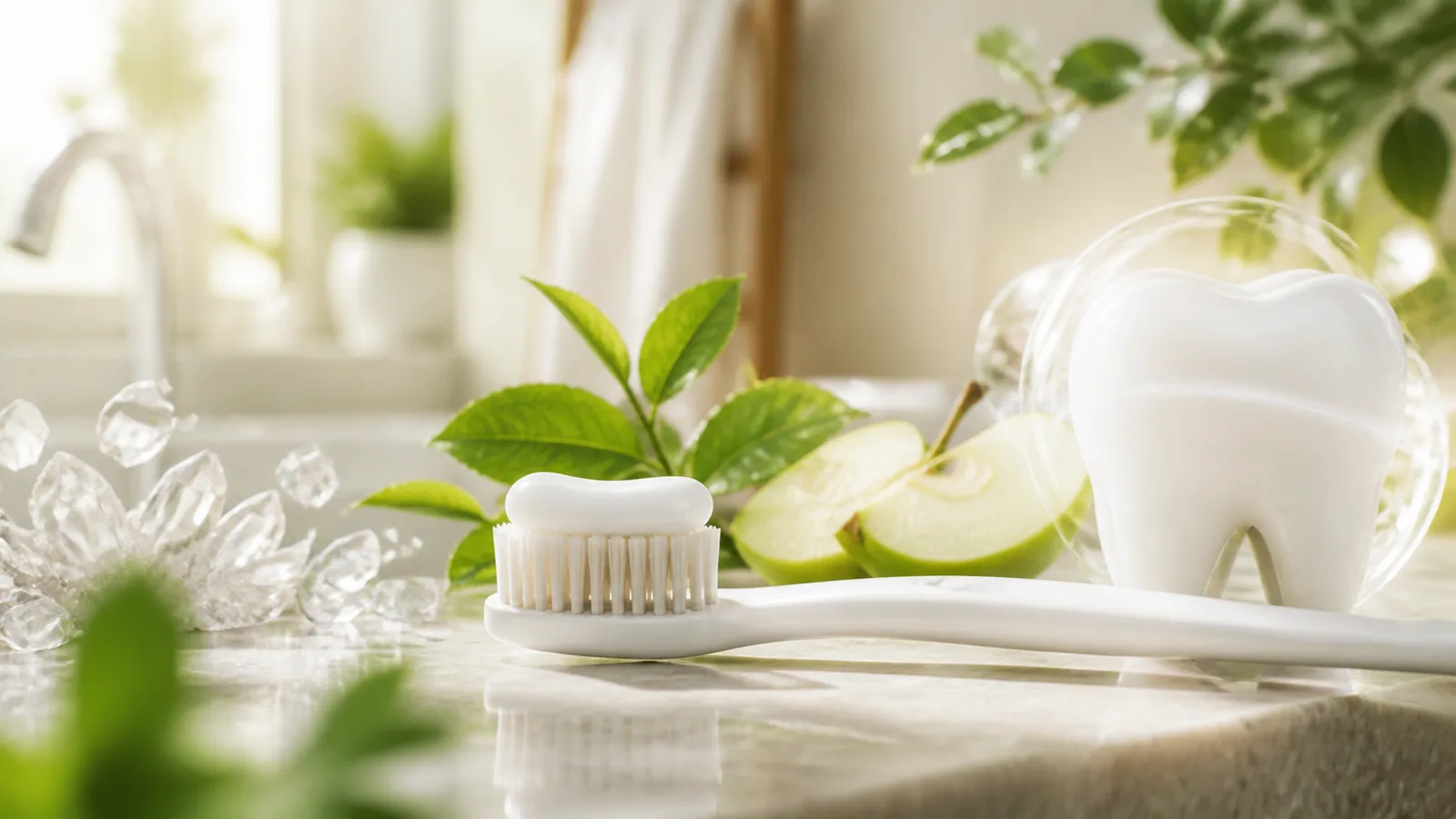



ProBio D is a toothpaste with Plantaricin A, mineral cleansing ingredients and plant extracts. It is suitable for daily oral hygiene in the morning and evening. However, the fresh or minty sensation after brushing is not the same as the cause of bad breath.
A Fresh Taste Does Not Measure Cleanliness
Flavouring and botanical ingredients change the taste and smell in your mouth immediately after brushing. Saliva, food and drinks gradually remove aromatic substances, so the fresh sensation fades. This is normal and does not mean the toothpaste has “stopped working” after a few minutes.
Bad breath is assessed by whether it keeps returning and what may be causing it, not by how long the toothpaste flavour lasts. Chewing gum, mints or mouthwash may temporarily change the smell, but they do not remove hardened plaque, tartar or gum inflammation.
Where Bad Breath Most Often Starts
A persistent odour usually originates in the mouth. Bacteria break down food residues and protein compounds, producing volatile substances with a noticeable smell. Plaque can build up particularly in these areas:
- on the back of the tongue;
- between the teeth;
- along the gumline;
- around orthodontic appliances;
- under removable dentures.
Tooth decay, gum disease and hard-to-clean areas can also sustain bad breath. When the problem keeps returning, the answer is not stronger masking but finding where plaque is collecting.
How Dry Mouth Affects Freshness
Saliva washes away food particles, moistens the oral tissues and contributes to the mouth’s natural defences. When there is less saliva, odour can become more noticeable. Dry mouth is common after waking, when you have not had enough fluids, when breathing through your mouth, or after smoking or drinking alcohol.
Some medicines and health conditions can make it worse. If dryness lasts through the day, makes it hard to speak or swallow, or comes with a burning sensation and frequent cavities, discuss it with a dentist or doctor. Do not stop prescribed medicines on your own.
Habits That Address the Cause
Daily care should cover more than the visible surfaces of your teeth:
- Brush with a soft-bristled toothbrush for at least two minutes in the morning and evening.
- Clean between your teeth every day with floss or suitable interdental brushes.
- Gently clean your tongue, especially its back surface.
- Clean removable dentures and other appliances as directed.
- Drink enough water and pay attention to persistent dryness.
- Have regular dental check-ups and professional cleaning when recommended.
Brushing harder will not make your breath fresher; it can injure your gums and increase sensitivity. A consistent technique that reaches every area matters more.
What ProBio D Contains
ProBio D contains eight key ingredients. Sodium bicarbonate and calcium carbonate form part of its mineral cleansing blend. Potassium chloride is used in products for sensitive teeth. Plantaricin A complements a formula designed for the oral microbial environment.
The botanical ingredients are extracts of Bletilla striata, apple and green tea, as well as stevia extract powder. The toothpaste is free from sodium lauryl sulfate. Its ingredients support the cleaning process and a fresh feeling, but they cannot address every cause of bad breath, such as tartar, gum inflammation or pronounced dry mouth.
How to Use ProBio D
Apply a small amount to a soft-bristled toothbrush. Brush the outer, inner and chewing surfaces of your teeth for at least two minutes in the morning and evening. Do not swallow the toothpaste.
A toothbrush cleans exposed surfaces, so interdental cleaning is a separate step. If the smell is linked to tongue coating, add gentle tongue cleaning with a scraper or brush without pressing hard. Mouthwash does not replace these steps.
Stop using the toothpaste if it irritates the oral tissues. Bleeding, pain or persistent sensitivity should be assessed by a dentist.
When to See a Professional
Make a dental appointment if bad breath persists despite regular cleaning of your teeth, interdental spaces and tongue. An examination is especially important if you have bleeding or swollen gums, pain, loose teeth, pronounced dry mouth, or a bad taste that keeps returning.
Sometimes the source is outside the mouth: bad breath can accompany conditions affecting the nose and throat, reflux, infections and other health issues. A dentist can first rule out common dental causes and refer you to another specialist if needed.
The fresh taste of toothpaste naturally fades, while effective hygiene continues to work by removing plaque. ProBio D can support a daily care routine, but persistent bad breath calls for attention to the tongue, spaces between the teeth, saliva and gum health—not an attempt to make the post-brushing taste last longer.